
MATERIALS FOR THERMAL DESIGN
THERMAL BY DESIGN

Material science.
Application perspective.

Explore the roles of graphene thermal materials and aerogel insulation within your design.

Technology & application overview

Nanoporous silica: controlling three heat paths

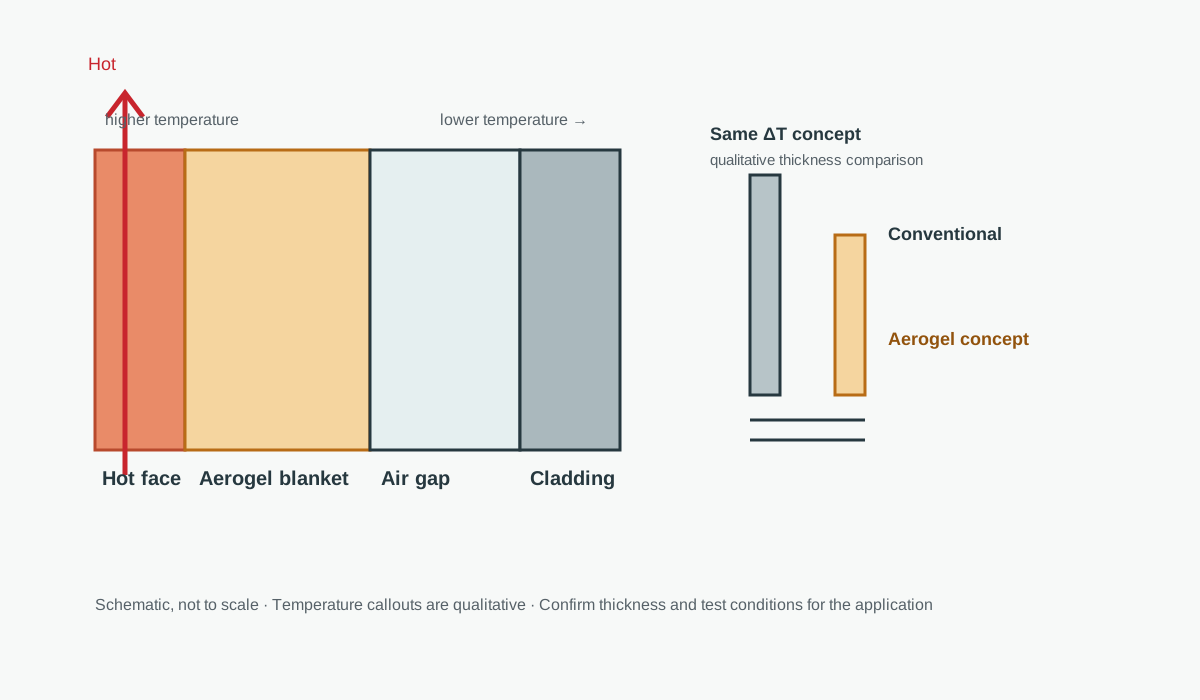
A porous silica structure limits heat flow through its solid framework and the gas within its pores. Radiative transfer must also be considered, especially as operating temperature changes. The complete formulation and installation determine the resulting insulation performance.
Graphene: coatings, interfaces and heatsinks

Surface coatings, thermal paste and structural graphene heatsinks serve different roles. CoolRock addresses surface treatment; KappaX addresses the contact interface. Research on aligned graphene structures is a separate development topic and should not be interpreted as a coating specification.

Insulation cross-section schematic, not to scale
ENGINEERING NOTES

Thermal management technology: graphene & silica insulation

Understand the different roles of surface coatings, thermal interfaces and nanoporous insulation before selecting a material.

01

Graphene: formulation matters

Graphene research provides a starting point for material development. A finished coating, paste and structural heatsink are different products. Ask for the actual grade, measurement direction, thickness and test method; research values for graphene alone do not describe every formulated product.

02

Nanoporous silica insulation

The original technology page also covers silica-based insulation. Evaluate the solid structure, gas-filled pores and radiative contribution together. Specify the hot and cold boundaries, installation pressure, moisture exposure and available thickness when discussing an aerogel barrier.

03

Compare complete assemblies

Compare insulation thickness only at the same geometry, temperature boundaries and heat-loss target. For cooling, separate the component-to-heatsink interface from the surface-to-environment path. Record the baseline assembly before changing materials.

Application FAQ

Can a graphene research value be used on a product datasheet?

Only use measurements that identify the supplied product and applicable conditions. Request the current specification and supporting method from TiKOUS.

GRAPHENE COATING

CoolRock

Heat-dissipation coatings for metal surfaces and heatsinks.

Explore material
THERMAL INTERFACE MATERIALS

KappaX

Thermal interface materials for component-to-heatsink integration.

Explore material
THERMAL INSULATION

Aerogel insulation

Insulation materials for designs where heat protection and space matter.

Explore material

From a material question
to an evaluation.

A clear application brief makes the technical discussion more useful.

01

Define

Start with the application, constraints and material’s role.

02

Compare

Agree on a baseline, material candidate and measurement conditions.

03

Evaluate

Review the observations, documentation and boundaries of the result.

Bring us your thermal challenge.

Share your application. Let’s find the next step.

Discuss your application